Showing posts with label conferences. Show all posts

Thursday, May 26, 2016

Museums & Security Symposium

Instead of hosting a full conference this year, we paired our AGM with a one day symposium on Museums & Security. Held at the Grace Jollymore Joyce Arts Centre in Tatamagouche the day was jam-packed full of great insights and knowledge from experts about how to keep museums and collections safe and secure.

Sgt. McLean & Const. Morgan with items stolen by Tillmann.
Image from the Globe & Mail
The day began with a presentation by Constable Darryl Morgan of the RCMP regarding his work on the John Tillman case. Although most people in the room were quite familiar with the the case, it was riveting to hear some of the details we could only get from Constable Morgan. We were urged to not believe Tillman's assertions of disguises and great escapades, and Morgan raised some important points about how museums can better keep their artifacts safer. He noted that having up-to-date videos and photos of artifacts on display and documenting their exact locations is extremely useful in determining if anything has gone missing or been misplaced. Having a collection digitized is absolutely critical in the event of a theft. He also recommended having two people on staff when visitors are present (at least one person near the door and another being a docent or in various rooms where visitors are). Video surveillance and making note of any suspicious people or behaviour (physical description, license plate numbers, date and time of visit) are also key. Already so much great information and this was just the first presentation!

The RCMP presence carried on with a talk by the Tech Crime Unit about the everyday dangers of using email or the web, and what we can all do to prevent viruses or becoming a victim of phishing scams. The key is prevention, including regular virus scanning (there are many free and reliable options out there) and firewalls. They made it very clear that it’s important not to open any emails or attachments that seem suspicious. In the museum world this can be difficult, so if an email is opened and you’re not sure what if it's legitimate or not, don't click on any links as they could open the door for viruses and hackers to do some serious damage to your system. 

Tom LeBlanc from the Department of Labour discussed the importance and necessities of being safe while on the job, good ol' OH&S. It is irrelevant whether you are a paid employee or a volunteer – it’s crucial to have adequate training and know all safety procedures. Most importantly, if you are unsure of anything at all, ask! Asking a question that can save you a lot of headaches and confusion in the future is more than worth it.
Rodney & Linda

After a great lunch and having the opportunity to pop over to the Margaret Fawcett Norrie 
Heritage Centre, we were back at it with ANSM’s Annual General Meeting. Thanks to outgoing board member Linda Rafuse for her wonderful service, and welcome to Marla Webber. We look forward to working more closely with her. Our President Rodney pointed out how busy our little organization is, and warned that we'll be looking for feedback on conferences and our AGM in the near future. We want to make sure we're meeting our members' needs. 

Tanya Sieliakus of HR-Pros presented the important basics of using best human resource management practices to stay free of legal problems. Her points were extremely relevant not only for staying out of any potential trouble, but also exemplified generally good human resource practices which should be a staple in any institution, large or small. She made it clear that happy employees are productive and safe, while unhappy employees will do the bare minimum and get into accidents more often, so having a hold on best HR practices is crucial to a happy, safe and productive group of employees or volunteers. She also stressed the point that if something isn’t written down or documented, then it didn’t happen. “Bullet-proof documentation,” as Tanya referred to it, can keep museums away from time-consuming problems and a ruined reputation.

Tying into this topic was a presentation by lawyer Richard Bridge, touching on the topic of risk management for charities and not-for-profit organizations (two terms which he noted, while often used interchangeably, are definitely different). The basis of successful risk management is rooted in good governance and management. He pointed out some governance risks which can include, but are not limited to, an unskilled, inattentive or otherwise lacking board of directors, challenges of conflicts of interest, and poor relations with others in the community or organization. Operational risks included inadequate or lack of supervision, training, and record keeping practices. Again, the key here as always is having the right information in order to prevent the worst from happening. 

Kellie talking all things disaster planning

To finish off this busy day was a great presentation by Kellie McIvor of McIvor Conservation all about disaster planning and implementation. She stressed the importance of tailoring disaster plans specifically to sites, as each one is different and therefore the emergency needs are different as well. It is vital to identify and lessen the unique risks of your site, which can be especially easy if a checklist (Kellie loves checklists!) of potential hazards and their likeliness of occurrence is completed, at least to get a start and a general idea of the sorts of risks you are likely to face. Kellie broke down the the fundamentals of a good disaster plan, which include all site and employee contact information, prevention, protocols for response and recovery, supplies and services, and finally policies and procedures. Though none of us want to think of a disaster happening at our sites, it is far better to be prepared just in case. Better safe than sorry!

When the day was all over a warm thank you was given to our gracious hosts at the Arts Centre and we were off in a whirlwind back to Halifax. What a day!

~Heather

Sunday, April 29, 2012

Canadian Museums Association Conference 2012 - Part 4

Keynote Address - Olivia Chow, MP
from politwitter.ca
Chow started off by saying that she loved the conference theme - the idea of being on the edge and shaking things up, to get outside the box and refresh our thinking. Now is the time to grow together and strengthen eachother through cooperative efforts. Chow has a degree in art history and is very familiar with museum work. She offered suggestions on building up the heritage community, such as the use of museum passes that allow visitors into multiple sites (like this). She talked about the need for one-stop shopping for online visitors, for websites that connect all the museums and allow the visitor to easily find what they are looking for.
Her message was one of looking ahead and staying relevant. So in 10 years time we will have 2.65 million 'new' Canadians. That's a huge audience to connect with and an interesting challenge for Canadian museums. Time to invite some new friends over for tea and a talk about what they would like out of their new country's museums.
Chow finished her talk early and then offered to stick around so people could ask her questions or give her messages to bring up during question period and/or share with her fellow politicians. The issues raised by conference attendees ranged from core operational funding to an updated national museum policy to cupcakes (I kid you not).

Closing Keynote Address - Chantel Hébert, Political Commentator & Columnist
The last time Chantel Hébert spoke at a CMA conference she reminded us how important it is to foster relationships with politicians of all stripes, regardless of who is in power. This time she gave us a no-nonsense evaluation of the new political realities on the fiscal front and government approach. So just to clarify, the following are my notes from her talk - her opinions.
This government is not in the business of seeking new missions or roles but are content to let the provinces run things however they want with the federal government operating as a silent partner. This approach to culture is very different from past governments. She talked a lot about the Harper government's tactics regarding Ontario and Québec, and suggested that the role of the Heritage Minister is to keep the peace with French Canadians. Since culture is so intrinsically linked with Québec politics and life in general, it is very difficult for the government to cut programs or services without getting severe backlash from the electorate.
Chantel Hébert talking about museums & politics

The Virtual Historian
Over the past few years we have moved from limited resources stored at local repositories to everything being online. While teachers are looking for information to enhance curriculum, the sheer volume of data is difficult to navigate. Teachers are looking for info that they can reuse, mix & match, and mould to fit their work. They want students to be doing inquiry-based work instead of research (as in, search again via google). The goal is to get kids thinking critically, to formulate questions and provide supporting information based on evidence. If we provide museum content as a finished product, this doesn't support inquiry-based learning. We should instead be using a backward model: identify the desired outcome - determine acceptable evidence of learning - design the virtual history lesson online. The new teaching model asks complex questions, such as "was Trudeau right to invoke the war measures act?
So in looking at online content, how do people react to websites? The University of Ottawa conducted eye tracking studies and found the following:
1. headlines draw attention first
2. people scan the headline for a few words and then move down the page in an F-shape pattern - the further you go down, the less you look to the right
3. visuals and faces draw attention
4. people are going in with preconceived notions and plans so we have to design with a purpose in mind
The Virtual Historian website lets teachers set up different accounts and levels for their classes, create lesson plans (they can share or keep these private). Through their work with teachers, they have heard the clear message that teachers really want content (and should be able to request specific themes or subjects) but need to be able to repurpose this content. So once again we are hearing the importance of crowd-sourcing and opening up the museum's doors to the public.

Awards
Christine & Bill with the Maritime
Museum of the Atlantic's CMA Award
 for Museum & Schools Partnership
I haven't mentioned the awards banquet or 65th anniversary dinner. Well, let's just say we ate some really good food, and a number of very deserving individuals won awards. Nova Scotia was well-represented, and the Maritime Museum of the Atlantic took home a CMA award for their Real Museum Reel History - Titanic 100 project.
Bill Greenlaw, Executive Director of the Provincial Archives, NS Museum, and Provincial Library for the Department of Communities, Culture & Heritage and also President of the CMA, was also awarded a Queen's Diamond Jubilee Medal.

Phew! That's it folks. I hope you learned a little something. I look forward to blogging about next year's conference in the Yukon!!

In case you missed them:
CMA Conference Part 1
CMA Conference Part 2
CMA Conference Part 3

Saturday, April 28, 2012

Canadian Museums Association Conference 2012 - Part 3

Carol Sprachman Memorial Lecture - Jean Labonté, paralympian
from cyberpresse.ca
I quite enjoy when non-museum speakers are invited to museum conferences. It's nice to get an outside perspective. So here are some life lessons from Labonte that I think would serve the museum community well to remember:
1. Whether we like it or not, we are part of a team. We can either bring everyone down or build eachother up.
2. When good things happen we rarely take the time to live in that moment and celebrate our success. We need to change this and reach out to share our successes with others.
3. We have to look beyond the obstacles, to fight through them and learn from the process.
4. We can do a lot with very limited resources.

He also shared a great Voltaire quote, "appreciation is a wonderful thing: it makes what is great in others belong to us as well". Surely if we can look up and out, and work cooperatively, we can present a unified voice that heritage matters. Celebrating the successes of other museums and sharing ideas will serve to further enhance our strong reputation among the Canadian public.

Culture, Identity and Climate - How Artists contribute to all Three
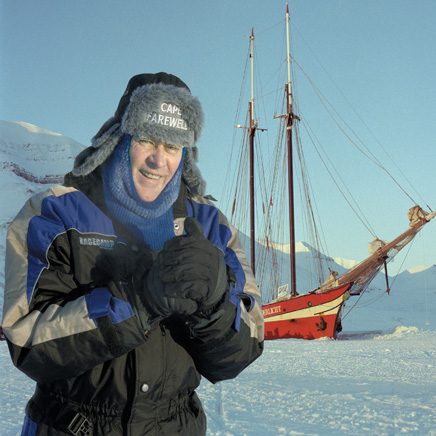
David Buckland, International Director of Cape Farewell
from archinect.com
Marshall McLuhan's teachings made an appearance again during this keynote address: "I think of art, at its most significant, as a DEW line, a Distant Early Warning system that can always be relied on to tell the old culture what is happening to it". When people care about an issue they express it culturally. Cape Farewell partners artists with scientists to study and share information about climate change. While the scientists conduct in-depth research, the artists are challenged to create a work that corresponds with 'their' scientist's area of study. The resulting exhibits are shown around the world and shed light on the issue. Click here for a sampling. Blurring boundaries between disciplines strengthens society as a whole (there's that notion of the greater good reappearing).

I recently asked participants at a workshop if museums had any sort of social responsibility to address current issues instead of only sharing information about the past. Only one person said yes. If museums are supposed to be stewards of our shared experiences, how can we say that addressing the worldwide issue of climate change is outside the scope of our work? Or any other issue facing our community, province, country, or the world? This doesn't mean we have to get preachy and turn into activists, but as the Montreal Science Centre learned with their 'controversial' exhibits - these are the issues that resonate with society. Presenting the public with the space to discuss hot topics is a very worthwhile community service.

How Interdisciplinary or Cross-Sectoral Collaboration Can Help Drive Innovation
Instead of sharing the 3 case studies from this session, I'm going to focus on the challenges and strategies faced by the organizations.
Challenges:
1. organization shift - previously focused on goals & mandate and had to start balancing these with goals of partner organizations
2. staff burn out & managing change -  staff are often overworked and were used to thinking and working internally so an external mindset had to be fostered
3. resource allocation - we are already stretched very thin...enough said
4. expense vs. revenue -sometimes boards don't want to support risky ventures, especially when money is involved
5. competing needs of organizations - negotiations must take place and be completely finalized before a partnership is solidified
6. mission driven vs. market driven programming - this connects with the organizational shift of reaching out and being more community-minded and ensuring that there is a balance between the two

the inspiring view from my hotel room
Strategies (aka stuff you don't ever want to forget):
1. look outward and create ties with your community - artists, other organizations...don't limit yourself
2. create a platform for academic thought - people love to be challenged intellectually
3. think about the human experience - the museum should be a place where people come to experience life and relate to others
4. don't just dictate information to visitors, teach them and let them learn by doing
5. address potential barriers such as lack of awareness or access
6. maintain frequent communications with all your partners & community

In case you missed them:
CMA Conference Part 1
CMA Conference Part 2
CMA Conference Part 4

Canadian Museums Association Conference 2012 - Part 2

Michaëlle Jean
Arts for Action. Arts for Change
The Right Honourable Michaëlle Jean

Jean began her address by saying that we need to rally the creative forces of the country. The conference theme this year was "On the Edge", and she pondered the interpretation of this phrase - are we on the edge of a precipice upon which our raison d'être is being challenged? Or are we on the edge of a breakthrough of cultural identity being revitalized?
In the current climate arts organizations must be more effective in communicating our value to Canadians. We must be explicit in expressing our purpose and its connection to social and economic benefits. We are the custodians of the nation's soul. Cultural institutions used to be considered as essential as air or water, but now we are more like a rudderless ship floating perilously at sea. Culture is a way to bring people together and sustain Canada's legacy. We must look at the current landscape as an opportunity; a test of character, a chance to reinvent ourselves and to heighten creativity and convert fear to hope. Hope and promise lie in young creators (the emerging artists and professionals) defying the odds; they are using the arts for social change. Creative life is married to social responsibility where creative minds are always thinking about the greater good. Fighting has become a creative exercise - the arts is true engagement and a labour of love. We are not simply aesthetic but can save lives, mould active citizens, contribute to sustainable communities, build bridges, and break down prejudices.

Young people are creative, socially conscious, and tech savvy. Through Jean's work with young people, she has heard that they fear established institutions are mere repositories that don't recognize the value of their content - artistically and/or socially. These institutions must be centres for creative expression of the present and future, not just a sanctuary of the past. Canadian museums need to become centres of their community to celebrate the creative soul of the nation. She suggested starting small, such as using one wall for community arts events, crowd-sourced curation etc. The goal is to become the nerve centre for cultural happiness with the public being active participants. We must ensure that art continues to matter. The message to our communities needs to be that we are together, we are conversing, and in this alliance anything is possible.


Designing Relevant Exhibits for People Who Hate Museums
I would summarize this session by saying "variety is the spice of life". All three panellists talked about the importance of research, planning, and thinking outside of the traditional museum box. The research component is crucial, and in developing each exhibit museums need to be asking who they are trying to reach (visitor target), what they are trying to say (storyline), and what visitors will do (interactive experience). Social media and mobile technologies can play an integral role in the experience, but we don't want to create an activity that people could just do at home.

The Montreal Science Centre identified 3 turning points in expanding their audiences:
1. development of a marketing plan that was backed by demographic research - who are the museum's clients, what do we want to accomplish, etc.

Ken, Exective Director of the
Museum Association of Newfoundland
& Labrador tries his hand at
Pacart's Plinko game in their
climate-controlled exhibit
transport truck during a break
2. refreshing the permanent exhibits with diverse displays and have controversial/bizarre temporary exhibits - grab people's attention and make them think twice about their idea of what a museum is and does (it is possible to have fun while learning)
3. pair internal offerings with online content - give visitors a way to connect with the museum before, during, and after their visit


At the Montreal Museum of Fine Arts they make sure to change exhibits regularly, integrate technology, cover a variety of subjects in their programming, and respond to visitor feedback. They have opened the doors to storage and invited artists to select something from the collection and then use it as the centrepiece to their own exhibit in the museum space, breaking down the old authoritarian boundaries. While this approach may seem simple enough (dare I say common sense?), it has resulted in a dramatic visitation shift - younger people are coming through the doors and regularly engaging with the museum.

The final panellist was from a west coast design firm and talked about how space, ideas and emotions must tie together to create great experiences. In designing exhibits, the outcome should be singular - a word or phrase that sums up the message and is supported throughout the exhibit narrative, allowing the visitor to easily take the idea with them. The space needs to be organized in such a way that the orientation reflects the tone and attitude of the exhibit, and subtle shifts in display techniques should allow the visitor to engage their body with the space. The key is to involve the public and not be afraid of trying new things. 


In case you missed them:
CMA Conference Part 1
CMA Conference Part 3

CMA Conference Part 4

Friday, April 27, 2012

Canadian Museums Association Conference 2012 - Part 1

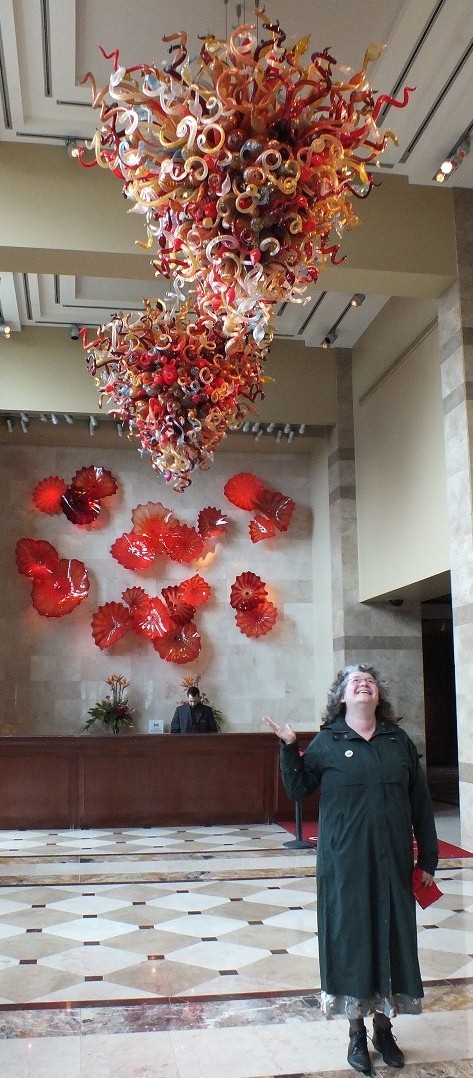
Anita in the hotel lobby
It's that time of year again, and over 500 museum professionals from across the country (and a few from around the world) have gathered in Gatineau Québec for the CMA conference. Having missed the conference last year, it's great to see some old faces and connect with people I usually only converse with by email. I was surprised at seeing so many young professionals and new faces; I think the average age of the delegates has dropped by at least 15 years. There is definitely a shift going on in the field.
There are always a lot of concurrent sessions, so Anita and I spent our breakfast time reviewing the schedule and deciding which sessions were best for us. So here are my notes on the sessions I attended - some things that jumped out at me over the 2 days.

Museums and the Making of Meaning - Robert Sirman, Canada Council
The current state of public support for culture is on everyone's mind. Sirman's talk focused a lot on Marshall McLuhan's teachings and how they can be applied to the work of museums. Information becomes meaning with time and narrative, and so communication systems end up creating social and psychological shifts.
So where do museums fall in the McLuhan time chart of technology? We are conduits for information over and above traditional media. Our traditional gate keeping role is under assault by new technology [I think that's rather harsh - I prefer to look at it as an organic shift in communications] and curating has been democratized. Curation is now an arts practice in and of itself; artists are curators and vice versa. Curators now face management complexities and must carry out the museum's mandate while thinking about the bottom dollar. To define the mandate of a public institution without consulting with and examining the benefit to said public is organizational suicide.

Sirman also talked about the reasons for social change:
1. Technology changes human neuro-patterning. We are a product of this.
2. Breakdowns/Crises create passion and incite action. We should question how serious this breakdown has to be though. There is nothing like imminent destruction to focus one's attention, but it can be rather exhausting to operate in crisis mode all the time.
Museums have enormous potential to generate meanings to society. We need to address a larger social mission, to fight for the survival of the sector and society as a whole. We know from studies that Canadians trust and respect us. We also know that whatever visitor statistics are being reported are no longer reflective of the level of engagement - online engagement is still not being tracked and studied as much as it should be. As we all move to share more information online, we must answer the questions about sensory limitations and how on-site programming can be enhanced. This is urgent. Instead of worrying about a breakdown, it's time to get creative and think about the opportunities to break through.

How to Play with a Full House: appropriate divestment of museum collections
Museums have amassed collections to preserve cultural heritage and now are faced with storage and relevancy issues. Over the past few decades disposal policies have quietly been developed (check out ANSM's online resources for deaccessioning procedures, proposals and worksheets) and according to the ICOM standards, every museum must have policies on both acquisitions and deaccessioning. So long as museums follow these policies and procedures there is little bad press. The controversy is over the notion that once an object enters a museum it will be there forever instead of undergoing study and review which may eventually result in its disposition.

Charlie Hill talked about the National Gallery of Canada's policy and approach, which outlines that the decision to deaccession is based on recommendations from the collections committee through discussions with the director, who then takes it to the board of directors for approval - joint effort with lots of discussion. Due to the amount of resources required to review the collection, instances of disposition are few and usually in response to an outside request.
Every museum needs to be conducting collections analyses to determine strengths and weaknesses. We have a responsibility to remove objects that don't fit our mandate and/or aren't likely to be used. So why do we hold onto these irrelevant items? Hill offered a number of reasons:
1. it is our duty to conserve and so culling the collection often makes museum workers nervous - to many it seems counter-intuitive
2. deaccessioning is a very lengthy process requiring significant resources
3. we don't want to insult our predecessors
4. fear of faulty judgement
5. risk of offending donors
6. collections in their entirety reflect life stages of the museum

However, when we collect we are taking risks and making judgements, so we must do the same with deaccessioning. The curator who doesn't know how to deaccession doesn't know how to collect. New acquisitions seek to counteract past weak decisions. So if items are wasting away in storage for 50 years because they just don't fit the museum's mandate, why not find them homes elsewhere?

Nancy Breugeman from MOA talked about their experience with conducting a large scale deaccessioning project. It took them 5 years to transfer 200 objects, which was a huge drain on resources and didn't solve their space issues. They chose not to sell anything due to the risk of bad publicity. As she spoke about transferring objects to other museums I couldn't help but think about the necessity to prove an object fits the receiving museum's mandate. It would be very irresponsible of an institution to just pass the same issues onto another site. All too often I see a list of objects up for deaccessioning and they are offered on a "first come first serve" basis. Shouldn't the receiving institution have to prove why they should get the object; the same way museums have to rationalize every new acquisition?
Bill Greenlaw delivering the opening address
Keep reading:
CMA Conference Part 2
CMA Conference Part 3
CMA Conference Part 4

Thursday, April 5, 2012

Professional Development

image from students.engineering.ubc.ca
Today I had lunch with a few colleagues, and after lunch we had another colleague visit the office which meant even more shop talk. Maybe it's because of the upcoming workshops, but the topic of professional development and staying current came up during both conversations. I am paranoid that I will fall out of touch with the field. How can I be an effective museum advisor if I don't have a grasp on the challenges faced by our members, and trends within the sector? Put simply, I can't. And at the risk of people getting very annoyed with me, I would argue that museums can't stay relevant in our ever-changing world unless they also keep up to date with these challenges & trends. Museums are educational institutions, ie we are focused on the pursuit of knowledge. That sounds like a call to action to me, and one that has to begin internally.

Now before you start getting defensive, I recognize that many of our members simply do not have a budget for professional development. We do our best to keep workshop costs low and to share resources and information for free via Facebook, the Beacon, regional meetings, etc. But there's just no comparison to actual people-people training. As I've been promoting our core curriculum workshops, I have heard a number of reasons for people not attending - and money is at the top of the list. Well, that's exactly why the CMA has a travel bursary

As I was thinking about how museums (of any size) could/should be participating in professional development opportunities, I came up with the following list:

1. Attend conferences - I'm going to skip the international specialized ones and start at the national level. The Canadian Museums Association's conference is coming up. This year's theme is "On the Edge". It consists of pre-conference workshops, post-conference study tours, and the program is chock full of concurrent sessions (not to mention the famous ice cream break). Anita and I end up picking sessions together, trying to figure out which ones are most important to ANSM and then parting ways to get as much learnin' as possible. We regroup over breaks and tell each other all about our respective sessions.
Provincially, ANSM has a conference every year. This year we'll be in Wolfville, September 13-14th. Again there will be a pre-conference workshop & study tour, and lots of sessions about engaging youth. And did I mention we're launching our collections website at the conference? I'm so excited for this that I'm already thinking about what to wear (anyone that knows me would tell you this is not normal).
And there are always a host of other conferences taking place - archives, built heritage, genealogy, marketing, tourism...the list goes on and on, and the information is either directly related or very transferable to museum work.

2. Attend workshops - I've already mentioned workshops a bit, so I'll just say that these are extremely important. Learning in a group setting through lecture, hands-on activities, and discussion will help you retain the information much better than just listening or reading something on your own.

3. Take advantage of site visits - I travel all summer, visiting museums from one end of the province to the other (literally - Wedgeport to Cape North). These visits are scheduled in advance as it takes a lot of coordination to cover an entire province in one summer. As I deliver training or converse with staff/volunteers I often hear things like "oh I wish so-and-so were here for this". If you know that someone from a professional organization will be visiting your site, call in the troops! Sure we may find it a little intimidating to be met with an entourage, but we would much rather endure this than repeat the same training or conversation for the same museum. Don't say yes to a site visit when there will only be summer students around. I love to meet students and see what they're working on, but they'll be gone at the end of the summer. You have to have a permanent staff person or volunteer on-site for these visits.

4. Regional Meetings & Listservs- Networking is important, and each of the four heritage regions have bi-annual meetings to compare notes, talk about opportunities for partnership or advocacy, etc etc. And sometimes they invite guest speakers to share information on a particular topic of interest. The meetings are announced via the regional listserv, an email list that facilitates discussion on all kinds of museum issues.

5. Read books - Most of the museum people I know are also avid readers. I have found some amazing resource books in used book stores and libraries, and every once in awhile a publisher will have a great sale on 'specialized' subjects (that includes museology). And did you know ANSM has a reference library? Well we do, and right now we're working on getting those books into CollectiveAccess so we can share the catalogue on our website.

6. Follow blogs - I follow 16 different museum-related blogs. A few belong to our member museums, but most take an overarching look at the field and focus on innovative ideas and techniques that anyone can mimic. The beauty of blogs is that you can check in with them whenever you have time, and the posts are short which means no worries about when the book is due back to the library or carving out 16 hours of reading time. Some of my favourite blogs are the Center for the Future of MuseumsExhibiTricksMuseum 2.0, Museum Audience Insight, Technology in the Arts, and the Uncatalogued Museum.

7. LinkedIn - I'm not really active on linkedin, but I am a member of several museum groups and once in awhile participate in a discussion. For anyone unfamiliar with this site, it's basically a professional forum. Some of the discussions can be really fascinating because these people are genuinely interested in what happens in museums worldwide. Talk about staying current.

It doesn't matter if you've been in the field for 30 years or are fresh out of school. If you aren't challenging yourself or investing in your staff/volunteers, it will become harder and harder to stay relevant to your community. Or as my predecessor would say, if you're not stirring the pot you're not cooking.

Monday, May 9, 2011

ANSM Conference 2011 - Part 2


Having to work at the conference meant that I didn't get to hear each presenter, but from talking with the attendees, I think it's safe to say this conference was a success.

Our keynote speaker was Scott Mair from the Swan Lake Nature Sanctuary.  He sang songs, he dressed up as a dragonfly, and he gave some really great advice on how to develop interactive and engaging programming.  He shared some solid stats that prove your visitation, revenue, and community buy-in will drastically increase if you take yourself a little less seriously and have a bit of fun.  He also provided a host of inexpensive ideas that any museum can incorporate into their work.
 
For the past couple of years we've had best practices panels - show and tell 2.0.  These sessions are always very popular since the presenters are all ANSM members and are very open about successes and challenges of their projects.  This year we had two panels - Out and About, and Close to Home.  In Out and About, we heard about Ross Farm's re-enactment of the New Ross Freighters, ox teams that carried goods from New Ross to Chester.  We also heard about Digby's annual fundraiser SAILabration, and about a group of museums along the Yarmouth-Acadian shore that joined forces to update interpretation and create a more cohesive network.

Josh and I presented on our qr code project while the second best practices panel was taking place, but I've heard that people learned a lot from the Glooscap Heritage Centre, Highland Village Museum, and Memory Lane Heritage Village speakers who addressed the issue of creating culturally relevant and engaging programming.  The other session that I missed was David Carter's - looking at what constitutes a good interpretive idea, and why some things that sound good may never work.

Dr. Dean Oliver (Canadian War Museum) delivered a general address on how to tell difficult stories.  Dr. Oliver reminded us that a difficult story can be anything that is "an important, visible, contested subject, challenging, yet within one's realm of professional competence, having high audience or public interest, and the possibility of substantial institutional impact".  This is what museum visitors are looking for, and is reflective of the shift from "tell and know" institutions to "help and understand" institutions.  As the Canadian War Museum continues to make this transition, it is finding that its audience-base is expanding.

Sally Warren ended the day with a talk about designing accessible programming for schools.  She gave us some very good points to ponder:
1. Schools want kids to learn how to think and to learn by  doing.  Museums have the primary resources to enable this.
2. Teachers want to clearly see how museum activities link to curriculum so they can evaluate their students' participation in the program.
3. Start small - develop one program and do it well.
4. School programs need to include on-site and off-site work, pre- and post-visit activities for the teacher to facilitate, and on-site activities led by museum staff and volunteers.

The AGM was attended by a dedicated and engaged crowd on Saturday morning.  It was a pretty standard meeting with one exception.  It was voted to move our annual conference to the fall.  Anita has been talking to our members about this for some time now, and what we've heard is that this will work better for everyone.

See you next year in the Southwest!

Thursday, May 5, 2011

ANSM Conference 2011 - Part 1

2011 Spring Conference Bannerr


It's great to be back at the blog after a two week hiatus.  Things got very busy in the office juggling some pretty big projects and preparing for our annual conference.  While things haven't really settled, I think it's time to take a step back, breathe, and review.

We focus a lot on geography in our work.  In order to provide fair and equal services to the four heritage regions (Cape Breton, Central, Northeast, Southwest), we move our conference around the province.  This means that it should be in your neighbourhood once every four years.  This year it was the Northeast's turn, and we were in the lovely town of Tatamagouche.

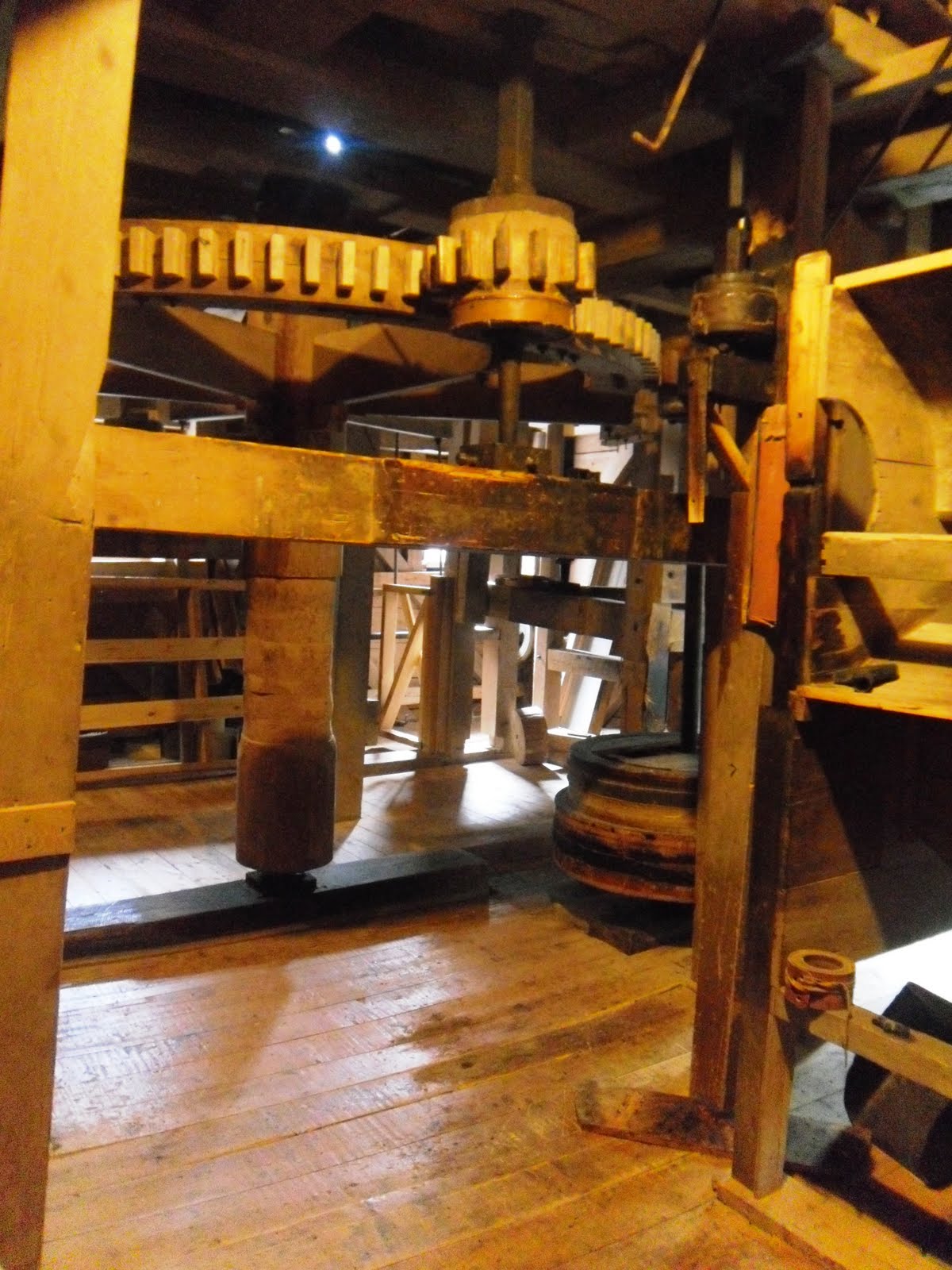
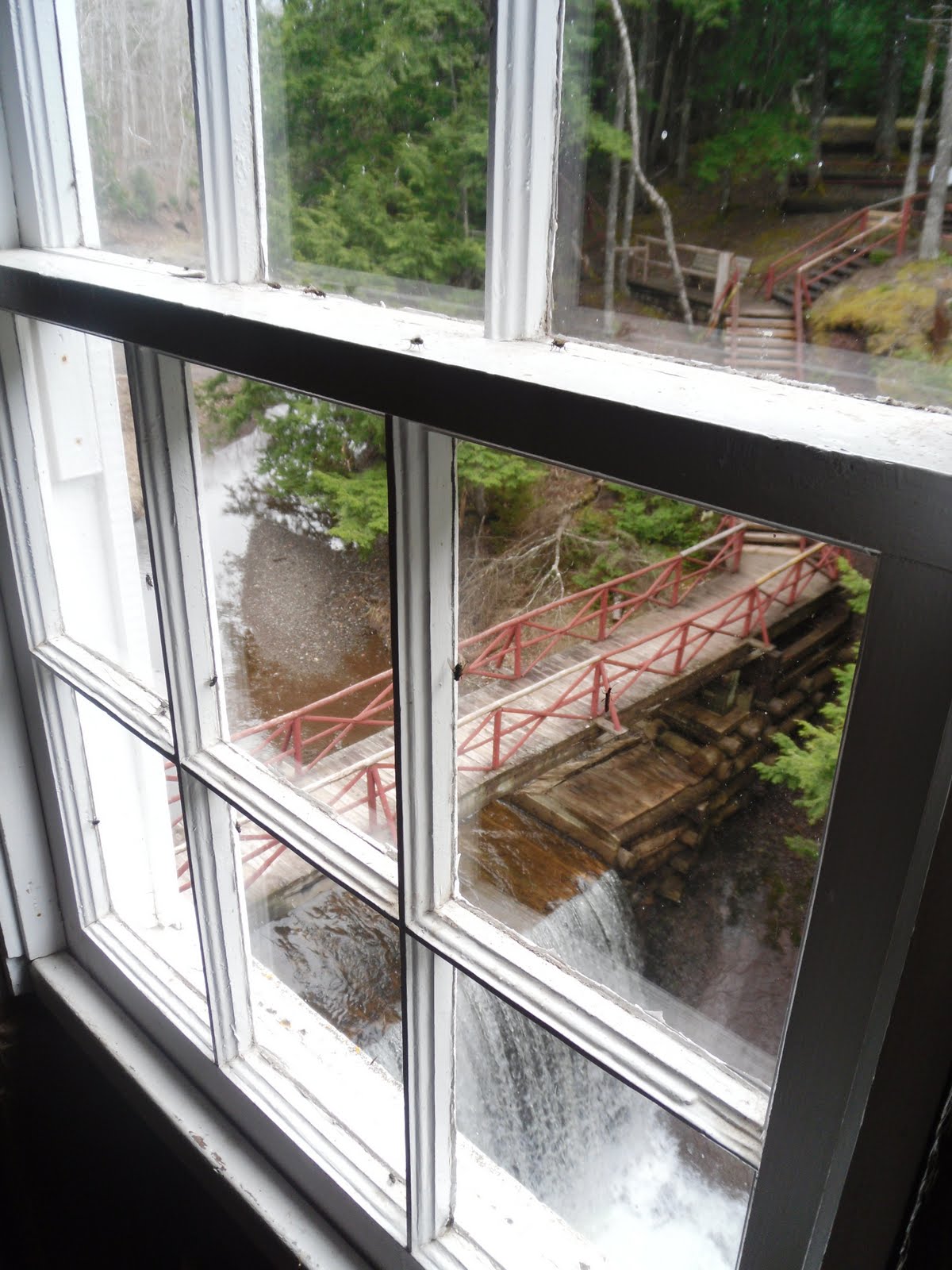
Thursday's afternoon activities divided the group.  The studious crowd stayed at the Tatamagouche Centre for a workshop on museums and insurance.  This is an issue that we've been hearing a lot about over the past 2 years, and it was great to be able to bring in some experts to share their insights.  The adventurous crowd went on a tour of local museums.  We visited the Creamery Square Heritage Centre, Wallace and Area Museum, Balmoral Grist Mill and Sutherland Steam Mill.  Yes, there were oatcakes and apple cider.

Having never been to the mills, it was great to finally check them off my list of Nova Scotia museums to visit.  I also thoroughly enjoyed our local tour guides and their insights as we drove from site to site.  I miss that during my lone travels around the province, and while I've spent a fair bit of time in this region, I'd never noticed the extensive Acadien dyke system or knew what old settlements were hiding in the woods.

So here are some pictures from the tour.  Thanks to the local arrangements committee for pulling the tour together.  It was a job well done!

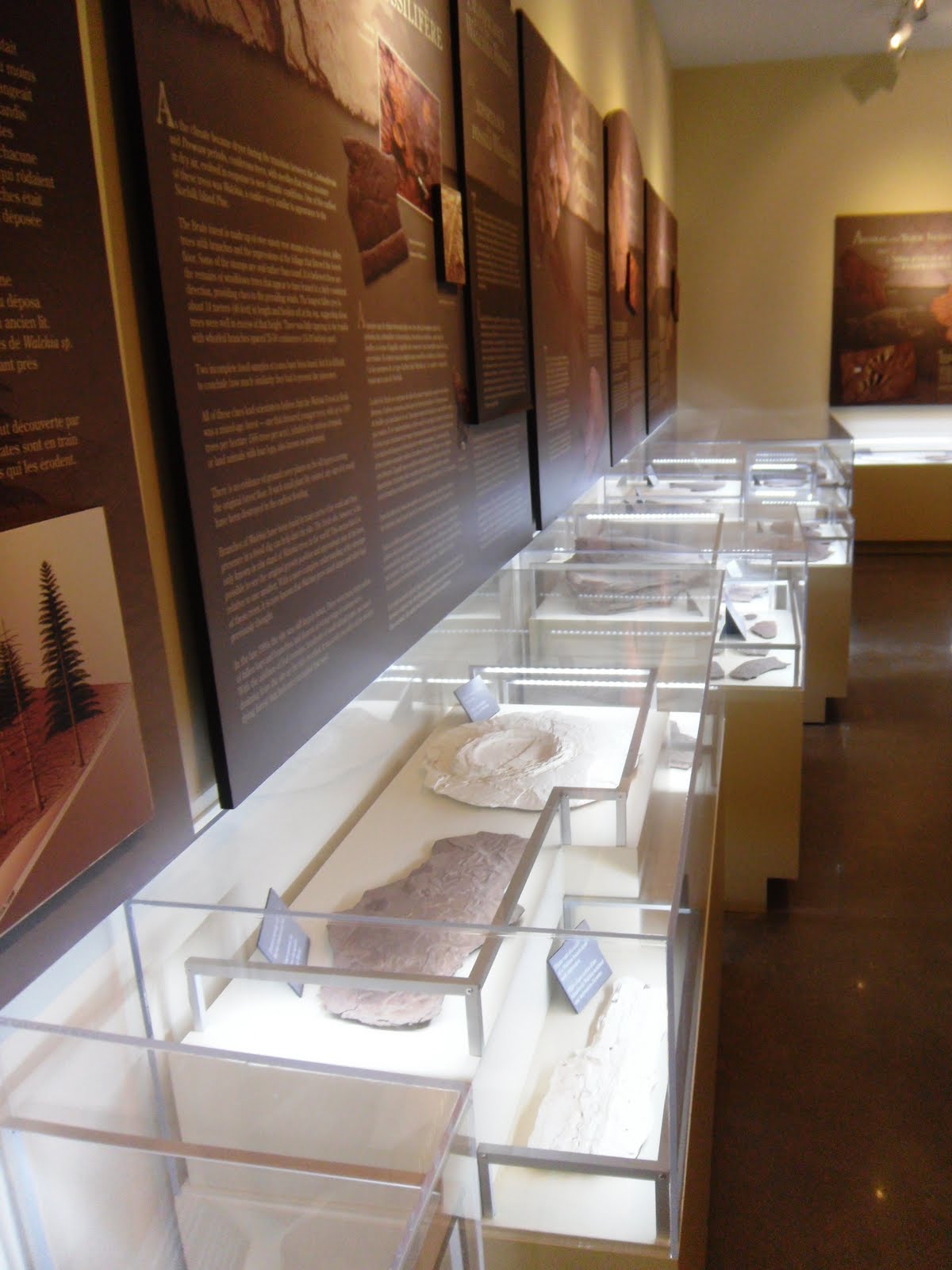
Brule fossil collection,
Creamery Square
Sally posing beside a reproduction of Anna Swan's dress,
Creamery Square

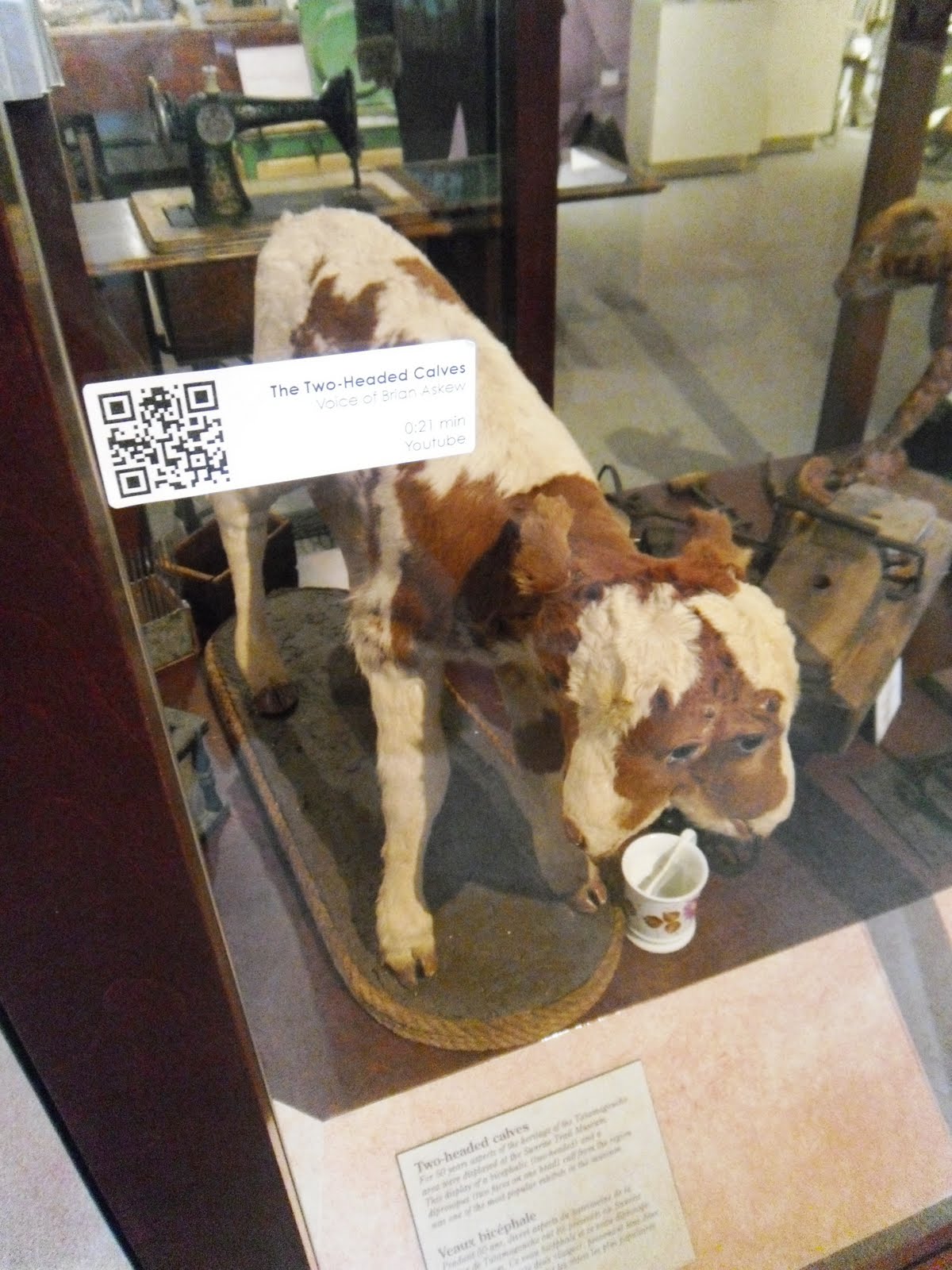
one of two 2-headed calves,
Creamery Square

hiking trails,
Wallace & Area Museum
mural in progress,
Wallace & Area Museum

Darrell teaching milling 101,
Balmoral Grist Mill

inside the Balmoral Grist Mill
Balmoral Grist Mill

school desk graffiti,
Sutherland Steam Mill
milling about,
Sutherland Steam Mill

There are lots more photos on Facebook, so feel free to check them out.

Wednesday, June 2, 2010

Canadian Museums Association Conference, St. John's NL

CANADIAN MUSEUM ASSOCIATION CONFERENCE
St. John’s, Newfoundland, May 11-14, 2010

This year’s CMA conference was held in the lovely city of St. John’s.  The theme was intangible cultural heritage, which is very appropriate for Newfoundland and Labrador

PMA Meeting
Since the provincial association staff members rarely get to see each other, we kicked off the conference with a little meeting to find out how everyone else is doing.  While not everyone could attend, representatives from six provinces and territories were at the table with CMA reps John McAvity, Monique Horth and John Tupper.

Alberta reported that they are moving forward with the Getty and University of Alberta partnership to bring the Getty’s leadership program to Canada.  This would be a week-long residency, accepting 25 people per year, that focuses on intensive development of leadership skills.  Participants receive a certificate from the Getty at the end of the week.  The cost is still to be determined, but will likely be around $1500.  They also reported that the provincial budget saw their budget cut by 13.75%.  They were able to keep staff and programs, but are operating in a more limited way.  Their conference will be September 23-25 in Edmonton.

New Brunswick will be having its conference October 13-15 in Saint John.  They have a part-time employee now who handles communications for the AMNB and has been conducting member surveys.  With a provincial election slated for September 27, AMNB has been compiling advocacy packages for all parties and candidates in the hopes of raising the profile of heritage in the political scene.

Newfoundland & Labrador has just completed a 5-year strategic plan that takes a strong marketing slant.  A consulting company is currently redesigning the MANL website, and they have partnered with Memorial University in order to make sure all member museums can be found on Google maps.

Ontario’s equivalent to the CMAP program is also under review at the moment, along with all other heritage programs.  It seems that we are in a very similar situation, as museums are calling for a more robust process with better feedback and more strict rules for participation.  While the outcome is not yet certain, there is a possibility that some museums may be cut from the program.  Their conference is in October, during which they will have a day at Queen’s Park to promote museums to their politicians.  They have also finished a 3-year strategic plan and conducted a member survey.

The Yukon has just completed a 5-year plan for working with museums on marketing, which includes the Territorial marketing department providing social media training to museums.  They are working with arts groups to develop cultural bus tours, with the pilot project taking place in Whitehorse.  They are also working on a passport program that will have visitors swiping cards so the association can collect data on visitor trends.

The CMA is currently in year two of its 5-year strategic plan, and is undergoing its 5-year audit by Canadian Heritage.  They are working on a new website, and recently conducted a salary study which will be released in January 2011.  In terms of advocacy, they are recommending an overhaul of the Museum Assistance Program, and want to establish a new museum sponsorship fund which would have the government matching dollar for dollar of donations.  Hill Day will be held November 22-23.  This is when museum professionals and advocate go to Ottawa to meet with and discuss issues with politicians. 

Intangible Cultural Heritage Panel
Intangible Cultural Heritage (ICH) is transmitted from generation to generation and is constantly recreated by communities and groups in response to their environment, interaction with nature, and history.  It provides groups with a sense of identity.  UNESCO has identified five domains in which ICH is manifested: oral traditions and expressions, performing arts; social practices, rituals and festive events; knowledge and practices concerning nature and the universe, and traditional craftsmanship.  Not included in ICH are contemporary arts such as dance and theatre, as well as folkloric manifestations or oral traditions that are no longer alive, and arts & crafts.

Intangible Cultural Heritage is important because it provides practicing groups with a sense of identity and continuity, therefore the practicing of the traditions is integral.  There are many threats to ICH in the current world, such as globalization, migration, and assimilation policies.  There is also a lack of means and appreciation or understanding of ICH, particularly in the younger generation, which is leading to an erosion of functions and values.

The purpose of the UNESCO Convention (adopted in 2003 and ratified in 2006) is to safeguard, ensure respect, raise awareness, and provide for international cooperation.  The Convention seeks to ensure the viability of ICH, fostering the continuous recreation and transmission of knowledge and practices through the recognition of the associated groups.  To date, 130 countries have signed the convention and are contributing to an ICH fund.  Canada has not signed.

The Urgent Safeguarding List asks parties to submit nominations for ICH elements that are facing imminent disappearance.  There is also a Register of Good Practices that provides a platform for sharing ideas on how to safeguard ICH. 

The Intangible Cultural Heritage States Party is essentially a league of nations that have signed the convention.  They have been tasked with ensuring the safeguarding of ICH, identifying and defining elements of ICH, and creating an inventory.  They have adopted a general policy to promote ICH and are fostering studies with the widest possible participation of communities and groups.

As heritage organizations we must ask ourselves how we can represent ICH without objectifying it, while still maintaining links between the displayed objects and their associated ICH. 

Dr. Richard Kurin of the Smithsonian spoke of how that organization approaches the intangible.  As he put it, “we’ve tried to document what was, before it is “was””.  To do this, they’ve hosted a folklife festival to let cultural groups and people speak for themselves.  The Smithsonian is not the end, but the means by which culture can be celebrated in a real way.  Gerald Pocius of Memorial University is conducting his ICH work in Newfoundland as though Canada had signed the Convention.  He has seen a shift from the museum as authority to community forum as all activities should begin with the community.  Curators operate as community advocates; curators of knowledge, not things.  Laurier Turgeon of Laval University sees a growing interest in living cultures.  Society is moving from the 1950s heritage regime in sites, authenticity, and conservation of things to a regime of people, performances and the transmission of knowledge.  We are now documenting material culture through oral histories.  Cultural institutions are discovering that famous artist exhibits are less popular than the sharing of local stories and traditions.  Museums should be using new technologies to capture and transmit ICH, such as a multimedia database that can be used for virtual exhibits, 3D dioramas, guided tours, etc.  Most importantly, once the information is captured it has to be returned to the community from whence it came.

Objects on Shelves and Cultures that won’t stand still
In a 2001 grand proposal to the Canadian Foundation of Innovation, the Museum of Anthropology (MOA) at the University of British Columbia stated that “collaborative museology is founded on the believe that originating communities should have a major voice in shaping research questions, and should benefit from the new knowledge produced.”  The first step was to create a memorandum of understanding between MOA and first nations groups of BC.  Both sides view this as a lifelong arrangement, and while it is legally legless, it is very morally and ethically strong.  In studying objects, they are viewed as instigators of events and are classified by indigenous systems, focusing on their function and use in ceremonies.  The project allows young native artists to easily research their cultural heritage and bring the knowledge back home to the community.

The culmination of the project is the Reciprocal Research Network (RRN) (rrnpilot.org), a website that connects geographically dispersed communities with their geographically dispersed material culture.  Google Earth is used to mark the originating community.  The museum has positioned itself as a neutral space for the display and research of objects, storing helpful knowledge for the community.  The RRN website provides users with the ability to carry on research and work at home and according to their own schedule.  It also allows users to add information or ask questions about the objects, operating as a true community forum.

Plenary – Wade Davis
Wade Davis works for the National Geographic Society as an “explorer-in-residence”, which he freely admits is an oxymoron.  He spoke of his experiences as an anthropologist, learning about different societies and their way of life.  He was quick to point out that while colonial Europe focused on technological innovations as being important, other cultures focused on oral histories and memory capacity.  As globalization continues, we are losing this variety of knowledge, along with the languages in which it was traditionally shared.  He cautions that this is a dangerous trend and as heritage organizations we must do what we can to preserve this traditional knowledge.  He has written a book on the subject called Wayfinders.

Development of Stories
In order to build passion and commitment for the museum in your own community, the museum’s vision must resonate with the people.  The museum must position itself as a hub for diverse voices, a centre for debate where people can become involved and empowered.  As such, the museum can tap into greater diversity, and new skills and knowledge, overcoming preconceived notions.  In order to achieve this, the museum must lead cultural change to embrace public participation and collaboration with community-based groups.  We need to overcome our nervousness about being in control at all times.

The goal of such activities is to collect local while thinking about the global context.  Build community by celebrating the full history, using the museum as a welcoming community and social space.  Look beyond the institution walls to what is happening and connect with the entire community.  One way to do this is to have a kids collection on display, where children can bring in interesting items to obtain points.  This is essentially a trading post, because as children bring in an item, the more information they can tell the staff person about it, the more points they get.  All objects are rated, and so if a child has something worth 5 points, they can trade their object for another object in the kids collection worth 5 points.  This way there is an ever-changing display of what the community’s children view as being important and interesting, and the children see the museum as a fun place.

In looking for partners to create broader community initiatives, don’t assume that they will go along with you.  It is absolutely imperative to talk with these groups before a project is started.  For instance, one museum in Philadelphia identified local artists who were interested in trading studio space for teaching kids about various art media and techniques.

From a funding perspective, the impediments to transformative change can be economic, political, or simply related to timing.  Museums must build their constituency up before building out, and understand the funder’s needs and problems.  In asking for funding, focus on how you can help the funder move an agenda forward or solve a recognized problem.  Governments want to see success immediately and are risk averse, so link to their policies for a better argument.  They want to be in line with the public wants and needs, so focus on incremental work that will be sustainable and welcomed by the community.  In dealing with funders one should expect resistance to change and manage it.  Nurture and educate your stakeholders to see the benefits of embracing new, exciting, and better ways of working.  Communication barriers are often difficult, but don’t be afraid to ask for or offer extra clarification to ensure that both sides are understood.

Plenary – Future for Museums?
Is there a future for museums?  Studies show that museums must present contemporary issues in an unbiased, non-partisan and engaging manner instead of focusing solely on the past.  This panel discussed societal trends and how museums need to respond to these trends.

Demographically speaking, society is shifting.  We are a graying population, and within 25 years 1 in 4 Canadians will be over the age of 65.  This means that there will be a strain on government for medical, retirement, and associated obligations.  So what is the future of museums with such important economic demands on funding?  On the plus side, there is a dramatic increased in older adults entering peak years of museum engagement, but this will require a shift in how museums traditionally engage this age group.

Another trend we see is what some call a “reverse gender gap”, meaning that women in their 20s are 50% more likely to have a post-secondary degree than men.  This means that they are single for a longer period of time, and fewer children are being born to young parents.  There is also the changing face of society to consider.  In the US, the population is currently 65% white, while 88% of museum visitors are white.  Within 25 years the white population will drop to 54%.  In Canada, by 2031 33% of Canadians will be a visible minority, so what are museums doing to reflect the various cultures and groups in our communities.

Parks Canada has recognized the above shifts, and are undergoing a paradigm shift to address these facts.  After conducting audience research, they are now proactively targeting individuals and organizations in a strategic and focused approach to figure out how to increase appreciation in the national parks system.

The final panelist was Marc Mayer, who made a few predictions about how museums will exist in the future.  While much of his talk was light-hearted and received laughs from the audience, there was a lot of truth to his words.  He suggested that since people are increasingly living in a 2-dimensional world, we will see an escape to 3D.  There will be a rise of for-profit specialized museums, and an increase in museum membership by Canadians.  There will be an increase in relevancy, with guest curators from diverse communities, and broad stories told through local or other specific lenses.

Doers & Dreamers
As we’re all aware social media is huge and museums can add some great education content to discussions and use the forums to learn more about their collections and how to better meet audience needs and expectations.  At the Art Gallery of Ontario (AGO), they have embraced social media and have garnered a large following in the process, expanding their previous audiences.  They liken social media to jazz in that once you learn the skillset you can improvise and excel.  Moderation of online forums then shifts to being responsive rather than authoritarian.

What the AGO discovered is that the simpler, the better.  After spending $6000 to create a video for their first YouTube experiment, no one was interested in the video.  As a second experiment they brought in a local hiphop artist to show how to “tut” as a promotion for their King Tut exhibit.  It didn’t cost anything, and was immensely successful. 
The information from this session has been incorporated into the ANSM’s new internet marketing report & recommendations that will be released in the near future.  It is hoped that this document will help museums navigate the online world and figure out how they can use it to their advantage.

Another way that museums can enhance their interpretation is through the use of augmented reality.  This is a new technology that merges the real and virtual worlds.  For example, the Ontario Science Centre has a fog screen that displays digital content that can be touched and even walked through.  Living postcards is another new feature, which allows people to embed video files on a coded card to send to relatives or friends as a postcard.  Why write when you can send a video message instead?  In the future it is highly likely that we’ll see more visualization and crowd sourcing strategies, as well as more natural interfaces.  This will have broad application in the humanities and fine arts fields.

Plenary – Jeffrey Simpson
At every CMA conference there is a plenary session with a speaker who is not from the museum field, and whose task it is to offer an outsider’s view.  Jeffrey Simpson is the Globe & Mail’s national affairs correspondent, and spoke largely about the Canadian identity.

Canada will succeed better if it knows itself more and is more interconnected with the rest of the world.  We face the typical challenge of small countries, whereas all politics are local, most issues we face are global.  There is a need for public display of creations that incorporates the mystic chords of memory which are not often heard.  While we may have struggled with this in the past, things have improved in certain areas since the creation of the CBC and cultural knowledge “renewal” of the 1960s.  We need to maintain a sense of place.  Each year we bring in the most new immigrants to our shores on a per capita basis in the world.  This elasticity of acceptance makes it easier for immigrants to assimilate quickly. 

Our story is one of tolerance, and isn’t this a much better history to share than the violent histories of so many other nations?  We have a very political history of which interpretation and re-interpretation is often controversial and constantly taking place.  Canada was a political construct, not based on unity but as a way of preserving the British colonies from the United States.

Canada needs more of the world.  We need a better understanding for and appreciation of cultures as well as deepened contacts that will allow us to do business in a wider range of places.  For museums, it’s time for a reality check.  In the present climate, more money is not coming, so the best that can be hoped for is the status quo.  Overseas tourism is not looking good in the short-term, so we have to work harder at being in the world and bringing our information to the world.

Cultivating Collections Responsibly
Traditionally, curators collected what they were interested in.  The 1990s saw a shift in attitudes and museums began to develop collection plans and research projects.  They recognized that the collection is for the benefit of the public.  For the Canadian Agriculture Museum (CAM), the mandate is to introduce science and technology to Canadians.  To do this, they require benchmark artifacts that show the technological progression of agricultural practices.  This includes examples of trade literature and period print that portrays agricultural practices.  In order to best meet their mandate, they conducted a collection development project.

In creating a collection development plan, several key analyses must be done.  The first is a historical assessment or intellectual framework.  This is a major research project that lays the groundwork for understanding the scope and key areas related to the museum’s mandate.  For CAM, factors included in the study were geography, development, associated science and research, and labour.  For other museums, the focus may be more on the social history context, using primary and secondary sources to make local connections. If you are a large institution, this work is often done on a contract basis by post-doctoral students or professors on sabbatical.  For smaller museums, the study can be broken into sections as time and resources allow instead of studying everything at once.  The nice thing about this kind of a project is that the research can be reworked into a variety of other documents and communications, not to mention exhibit text.

The second step to a collection development plan is to do a collection assessment.  This is another research document that connects objects in the collection to the findings of the historical assessment.  It places the object(s) in the context of the technology that preceded and followed.  This is a description of the ideal, focusing on key pieces and support materials.  Using an annotated list, identify each object and justify its inclusion in the ideal collection.  Once the existing collection is analyzed, the curator reviews the collection to ensure that all technologies mentioned in the historical assessment are represented in the collection.  Where duplication exists, artifacts are assessed based on completeness, condition, and degree of provenance.

The third step is to create an acquisition proposal that aims to shape the ideal collection, filling the holes that were discovered during the previous two steps.  Comparing the existing collection to the idea collection, comparisons can be made, and priorities and strategies can be developed.  Considerations for acquisition should include whether or not the object fits the collection requirements, has its original integrity, has documented provenance, and whether or not the museum has the resources to care for it.  Acquisition is often tied to deaccessioning due to space requirements.  As the project continues, tension will become evident between objects of great value and insignificant objects with little relevance.

The goal of any museum is to have a collection of objects and documents that reflect the mission and mandate of the museum, and be used to tell related stories and foster understanding and engagement.  It must be properly cared for, documented and made accessible to the public.  Collections management should be the combination of intelligent collecting and thoughtful pruning.  The collection should be dynamic, undergoing a continuous process of acquisition, management, and renewal.

The challenges in such projects include finding specialized researchers to do the job, and being able to pay them a reasonable wage.  This is not a full-time job, and research funds are often difficult to come by.  While some organizations rely on students or volunteers, the quality of this work can sometimes be questions.  At a board or senior staff level, there may also be resistance to undertake such a project as it may challenge the fundamental mission and operations of the museum.

In order to make the process easier, check and see if applicable research already exists.  Considering partnering with students, interns, and volunteers to better train them on how to complete the project, but if at all possible a professional researcher should be hired.  In terms of the time involved, be committed to moving forward and be sure to get the support of the board and management.  Time should be built into work plans for collection development.  Identify manageable sections and coordinate the work with other collections-based activities.

Recommended reading:
Collection Conundrums: Solving Collections Management Mysteries by Rebecca A. Buck and Jean Allman Gilmore
Doon Heritage Village Collection Plan

Study Tour – Colony of Avalon, Ferryland
For those who haven’t spent a lot of time in the St. John’s, there is a remarkable archaeological site and interpretive centre about an hour south of the city.  The Colony of Avalon was one of the first permanent English settlements in North America, established in 1621 by Sir George Calvert who later became Lord Baltimore.  A wealth of material culture continues to be excavated from the site, which is processed and treated in the on-site conservation lab or at Memorial University’s archaeology lab.  Visitors can walk along the 17th century cobblestone street and watch the dig, check out what artifacts are being worked on in the lab, and see the display of finds in the visitor centre. 

For a small community, the site has become a staple in their economy.  The Colony of Avalon Foundation’s annual budget is twice that of the town of Ferryland.  The gift shop is of particular interest as it raises 50% of their operating budget.  While this is an amazing statistic, on visiting it is easy to understand why it’s so successful.  The shop is filled with locally made reproductions of ceramics, jewelry and other objects from the archaeological site, as well as other locally produced items that are totally unique.  Buying something from the gift shop means that the visitor has a real souvenir of this particular site, something they couldn’t get anywhere else.  Of course, postcards, books and the like are also available.  For breakable items, the gift shop will ship items (provided the visitor will pay the shipping costs), scheduling the arrival with the end of vacation if necessary.

CMA Awards Banquet
Congratulations again to the Creamery Square Association for their CMA award in facility development.  


Here’s project manager Colin Fowlie accepting the award.